
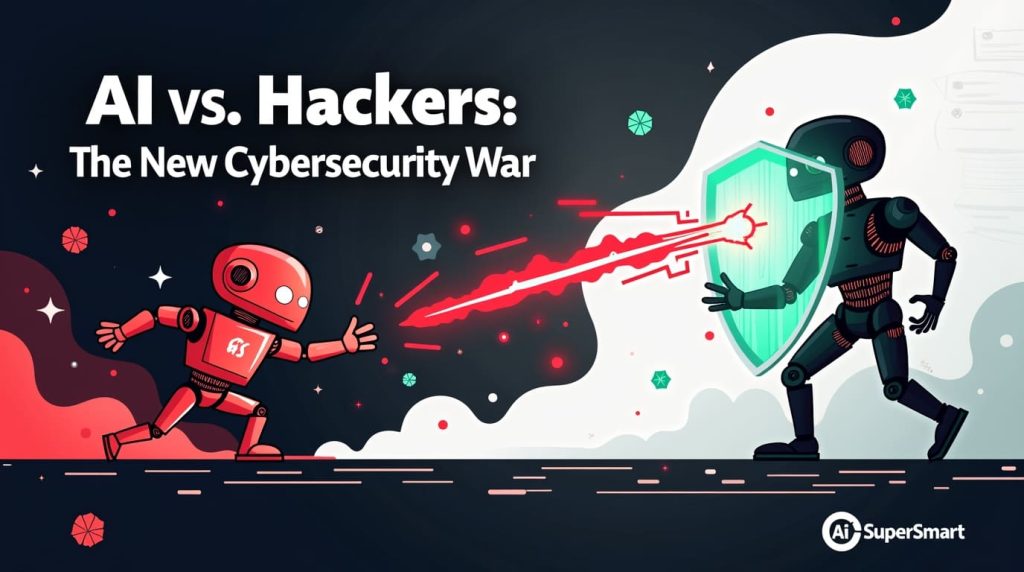
The digital world is buzzing with danger. If you’re still counting on humans to manually manage your company’s devices to keep hackers at bay, I’ve got bad news: you’re fighting a losing battle. Hackers aren’t just knocking on your doors anymore—they’re using artificial intelligence (AI) to blow them wide open. They’re faster, smarter, and more relentless than ever, and they’re leaving cybersecurity teams scrambling to catch up. The old-school way of managing devices—checking updates by hand, monitoring threats one by one, and hoping for the best—is dead. Done. Kaput. And here’s why.
Today’s cybercriminals aren’t your average basement-dwelling nerds anymore. They’ve got AI in their corner, powering attacks that move at lightning speed. Meanwhile, businesses are stuck managing thousands of phones, laptops, and tablets with teams that are stretched thin and budgets that are even thinner. It’s a recipe for disaster. But there’s hope—AI isn’t just the bad guy’s weapon. It’s also the hero businesses need to fight back. Automation is the name of the game, and if you’re not on board, you’re toast.
Let’s dive into this cybersecurity mess and figure out why manual device management is a relic of the past—and how AI is swooping in to save the day.
The Problem: Too Many Devices, Too Little Time
Imagine you’re an IT admin. Your job? Keep the company’s network safe. Sounds simple, right? Except you’re juggling thousands of devices—laptops, smartphones, tablets, you name it. Each one’s a potential weak spot where hackers can sneak in. A recent study dropped a bombshell: the average organization has over 10,000 devices connected to its network. And get this—each device has about 10 vulnerabilities on average. Do the math. That’s 100,000 little cracks for hackers to exploit.
Now, let’s talk apps. You probably think your company uses maybe 30 apps. Wrong. Research shows the real number is closer to 600. That means you’re only aware of about 5% of what’s actually running on your network. The rest? Shadow IT—stuff employees are using without you knowing. Good luck manually tracking all that down. It’s like trying to herd cats in a thunderstorm.
And it’s not just the numbers that are overwhelming. Half of all mobile devices out there are running outdated operating systems—think old Androids or iPhones that don’t get security updates anymore. That’s like leaving your front door unlocked in a sketchy neighborhood. Last year, Android had over 500 documented vulnerabilities, and iOS wasn’t far behind with more than 300. Every single one of those is a gift to hackers, and they’re not shy about unwrapping them.
Hackers Have AI—And They’re Not Afraid to Use It
Here’s where it gets downright terrifying. Hackers aren’t just relying on their own smarts anymore—they’ve got AI doing the heavy lifting. Picture this: AI-powered tools scanning your network for weak spots faster than you can blink. They’re crafting phishing emails so convincing you’d swear they came from your boss. They’re automating ransomware attacks that lock up your data and demand a payout before you can say “backup.” And the scariest part? AI lets them adapt on the fly, learning from your defenses and finding new ways to break in.

It’s an arms race out there, and the bad guys are winning. They’re using cheap or free AI tools to scale up their attacks, hitting more targets with less effort. Manual device management—where humans have to spot threats, patch holes, and fight back—doesn’t stand a chance against this machine-speed onslaught. It’s like bringing a slingshot to a tank fight.
AI to the Rescue: Fighting Fire with Fire
But hold up—it’s not all doom and gloom. If hackers can use AI to attack, businesses can use it to defend. That’s where AI-powered device management comes in, and it’s a game-changer. These systems take all the grunt work off your plate—updating software, watching for threats, and locking down devices—all without a human lifting a finger.
Think of it like this: instead of an IT team manually checking every device, AI does it in milliseconds. It’s got predictive analytics, so it can spot trouble before it even happens—like flagging a device acting weird or predicting when it’s about to fail. It learns from every attack, getting sharper and tougher each time. It’s like having a super-smart guard dog that never sleeps.
Take Company X, for example. Last year, they got hit with a ransomware attack. Hackers used AI to encrypt their data and demanded a fortune to unlock it. Normally, this would’ve been a nightmare—hours or days of chaos as the IT team raced to fix things. But Company X had an AI-powered system in place. It sniffed out the attack, isolated the infected devices, and stopped the hackers dead in their tracks. They were back in business in hours, not weeks, and didn’t pay a dime. That’s the kind of power AI brings to the table.
Why Manual Management Is a Total Bust
Let’s be real: managing devices by hand is a soul-crushing slog. Cybersecurity teams are already burned out, and there aren’t enough pros to go around. The talent shortage is brutal—companies can’t hire fast enough to keep up. So when you’re asking your team to manually update thousands of devices, chase down vulnerabilities, and prep for audits, you’re basically setting them up to fail.
AI flips that script. It handles the boring stuff—patching holes, enforcing rules, keeping devices healthy—so your team can focus on the big picture. Instead of drowning in busywork, they can train staff, build better security plans, or just, you know, take a lunch break for once. And it’s not just about making life easier. Businesses using AI see response times drop from hours to milliseconds, costs go down, and defenses get stronger. It’s a win-win.
Okay, But Is AI Perfect?
Now, I know what you’re thinking: “This sounds too good to be true. What’s the catch?” Fair question. Some folks worry AI could be hacked itself, turned against us by the bad guys. Others freak out about job losses—will AI replace all the cybersecurity pros?
Here’s the deal: sure, AI isn’t flawless. Nothing is. But humans? We’re way more likely to mess up—clicking sketchy links or forgetting to update software. AI cuts down on those mistakes, making us safer overall. And jobs? The cybersecurity field is so short-staffed that AI isn’t stealing work—it’s picking up the slack. It’s like a trusty sidekick, not a replacement.
The Bottom Line: Get On Board or Get Hacked
So here’s the cold, hard truth: manual device management is a dinosaur in the age of AI attacks. Hackers are too fast, too smart, and too automated for humans to keep up. If you’re still doing things the old way, you’re basically handing them the keys to your kingdom.
But it’s not too late. Businesses that switch to AI-powered device management are staying ahead of the curve—faster, tougher, and ready for anything. The ones that don’t? They’re the next big headline about a data breach that could’ve been avoided.
Don’t wait for the wake-up call. The future of cybersecurity is here, and it’s all about AI. Are you ready to let it take the wheel—or are you okay with crashing and burning?



 Login with Google